


Hay gobiernos que construyen museos y financian óperas. Y hay gobiernos que encarcelan artistas, borran murales y queman libros. A veces son los mismos.
Columnista: Yael Hervert | Tampa, FL | Mayo 2026
La relación entre el arte y el poder político nunca ha sido neutral. Cuando el arte se limita a decorar, el Estado lo tolera. Cuando el arte nombra lo que el poder prefiere callar, la respuesta puede ser brutal. Estas son algunas de esas historias.
Ai Weiwei: arte como evidencia
En 2008, un terremoto devastó la provincia china de Sichuan. Entre los escombros quedaron miles de niños muertos bajo edificios escolares que se habían derrumbado por corrupción en la construcción. El gobierno chino nunca publicó las cifras oficiales.
Ai Weiwei lo hizo por su cuenta. Organizó una investigación ciudadana, recopiló 5.000 nombres de niños fallecidos, y los convirtió en una instalación: Remembering (2009), una fachada del Haus der Kunst de Múnich cubierta con 9.000 mochilas escolares que formaban la frase, en chino: “Ella vivió felizmente durante siete años en este mundo.”
El gobierno chino respondió demoliendo su estudio en Shanghái. En 2011 lo detuvo en el aeropuerto sin cargos formales y lo mantuvo 81 días incomunicado. Durante ese tiempo, su paradero fue desconocido para su familia y para el mundo.
Cuando salió, tenía prohibido salir de China. Siguió haciendo arte.
Pussy Riot: tres acordes contra el Kremlin
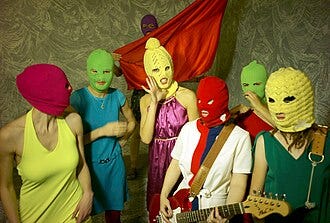
El 21 de febrero de 2012, cinco mujeres enmascaradas entraron a la Catedral de Cristo Salvador en Moscú, subieron al altar y ejecutaron durante cuarenta segundos una punk prayer — una oración punk — pidiendo a la Virgen María que librara a Rusia de Putin.
Las detuvieron antes de que terminaran. Tres de ellas — Nadezhda Tolokonnikova, Maria Alyokhina y Yekaterina Samutsevich — fueron juzgadas por “hooliganismo motivado por odio religioso” y condenadas a dos años de prisión en colonia penal.
El proceso fue transmitido en vivo y siguió por el mundo entero. La condena convirtió a Pussy Riot en símbolo internacional. Amnistía Internacional las declaró presas de conciencia. Bandas de rock en todo el mundo grabaron versiones de su canción.
Tolokonnikova describió las condiciones en la colonia en cartas clandestinas que llegaron a la prensa: jornadas de dieciséis horas cosiendo uniformes policiales, amenazas, aislamiento. El arte que las puso en prisión era rudimentario, inacabado, técnicamente imperfecto. Era exactamente lo que tenía que ser.
Diego Rivera y los Rockefeller: el mural borrado
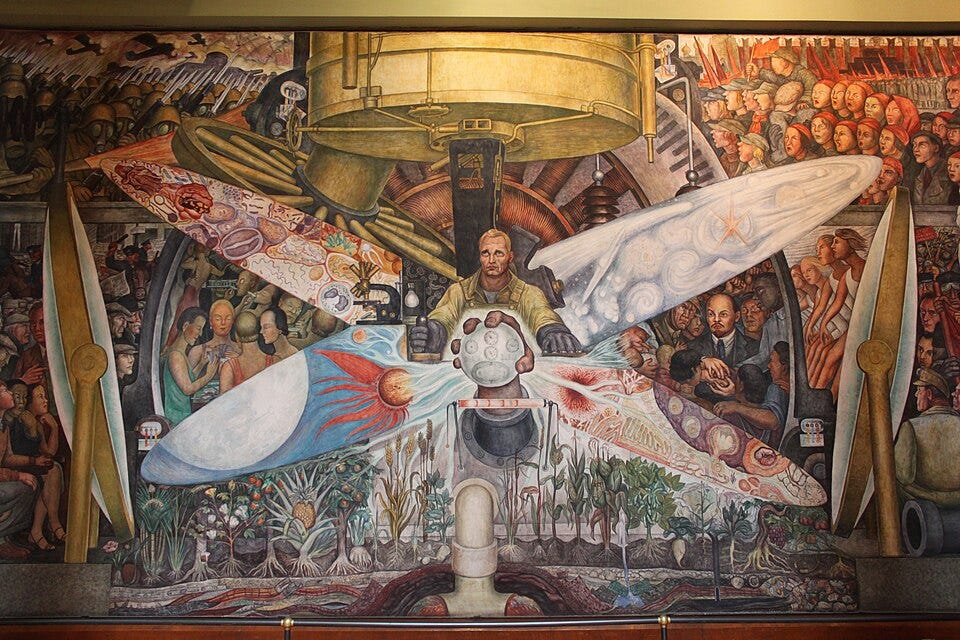
En 1932, Diego Rivera recibió el encargo más paradójico de su carrera: decorar el lobby del Rockefeller Center en Nueva York. El comitente era Nelson Rockefeller, heredero de uno de los mayores imperios capitalistas del mundo.
Rivera pintó El hombre en la encrucijada: una visión utópica del trabajo, la ciencia y la revolución. En el centro del mural colocó un retrato de Lenin.
Rockefeller le pidió que lo eliminara. Rivera se negó. En mayo de 1934, obreros contratados por la familia Rockefeller destruyeron el mural con martillos. Rivera había anticipado la posibilidad: guardaba fotografías. Con ellas reconstruyó la obra en el Palacio de Bellas Artes de la Ciudad de México, donde todavía puede verse hoy.
Lo que los Rockefeller destruyeron con martillos, Rivera lo inmortalizó con pintura.
Los murales de Belfast: arte en una ciudad dividida
Durante décadas, los muros de Belfast fueron el periódico de una guerra civil no declarada. Los murales callejeros documentaban mártires, proclamaban lealtades, amenazaban enemigos. Eran arte político en su forma más directa: no había galería, no había curador, no había distancia estética.

Con el Acuerdo de Viernes Santo de 1998, muchos de esos murales fueron borrados o remplazados. Algunos por imágenes de paz. Otros simplemente por pintura gris. La decisión de qué conservar y qué destruir se convirtió en sí misma en un acto político.
Hoy el Bogside de Derry y las calles de Belfast siguen siendo destinos para quienes quieren entender qué puede hacer un mural que un comunicado de prensa no puede.
Jafar Panahi: filmar desde la prisión domiciliaria
El director de cine iraní Jafar Panahi fue arrestado en 2010, condenado a seis años de prisión y a veinte años sin poder hacer películas, escribir guiones ni salir de Irán.
Siguió haciendo cine.
This Is Not a Film (2011) fue rodada en su apartamento con un teléfono móvil y una cámara de video, mientras esperaba el resultado de su apelación. La película fue sacada clandestinamente de Irán en una memoria USB escondida dentro de un pastel, y llegó al Festival de Cannes.
Desde entonces ha dirigido cuatro películas más bajo distintas formas de restricción legal. En 2022 fue detenido nuevamente al protestar por el arresto de otros cineastas. Mientras estuvo preso, su película No Bears ganó el Premio del Jurado en Venecia.
Lo que estos casos tienen en común
Los gobiernos que reprimen artistas no lo hacen por capricho estético. Lo hacen porque saben algo que a veces olvidamos: el arte tiene una capacidad particular para hacer visible lo que el poder necesita mantener invisible. No argumenta, no debate, no negocia. Muestra.
Un mural puede decir lo que un artículo de opinión no puede. Una performance puede interrumpir una narrativa oficial de formas que ningún discurso político logra. Y esa eficacia es exactamente lo que lo hace peligroso.
La historia del arte censurado, destruido o perseguido no es una historia paralela a la historia del arte. Es parte de ella.
Referencias
Casos y fuentes primarias
Ai Weiwei (2011). Declaraciones tras su liberación. The Guardian, 23 de junio de 2011.
Tolokonnikova, N. (2013). Cartas desde la colonia penal IK-14. Publicadas en Novaya Gazeta.
Panahi, J. (dir.) (2011). This Is Not a Film [película]. Distribución clandestina / Festival de Cannes.
Lectura crítica recomendada
Berger, J. (1972). Ways of Seeing. BBC / Penguin Books. — Análisis fundamental sobre arte, poder y representación.
Sontag, S. (1977). On Photography. Farrar, Straus and Giroux. — Sobre la imagen como instrumento político.
Danto, A. (2003). The Abuse of Beauty. Open Court. — Sobre arte, política y provocación.
Archivos e instituciones
Amnistía Internacional — casos documentados de artistas presos: amnesty.org
Freemuse — organización dedicada a la libertad artística: freemuse.org
Tate Modern — Ai Weiwei, archivo de obras: tate.org.uk

Catarxis
Revista de arte y creatividad
Substack | Ecosistema editorial
English Version
When Art Makes the State Uncomfortable
Some governments build museums and fund opera houses. And some governments imprison artists, erase murals, and burn books. Sometimes they are the same government.
Columnist: Yael Hervert | Tampa, FL | May l 2026
The relationship between art and political power has never been neutral. When art limits itself to decoration, the State tolerates it. When art names what power would rather keep silent, the response can be brutal. These are some of those stories.
Ai Weiwei: Art as Evidence
In 2008, an earthquake devastated China’s Sichuan province. Among the rubble lay thousands of children killed under school buildings that had collapsed due to corruption in their construction. The Chinese government never published official figures.
Ai Weiwei did it himself. He organized a citizen investigation, compiled 5,000 names of children who had died, and turned them into an installation: Remembering (2009), a facade of Munich’s Haus der Kunst covered with 9,000 children’s backpacks forming a sentence in Chinese: “She lived happily for seven years in this world.”
The Chinese government responded by demolishing his Shanghai studio. In 2011, he was detained at the airport without formal charges and held incommunicado for 81 days. During that time, his whereabouts were unknown to his family and to the world.
When he was released, he was forbidden from leaving China. He kept making art.
Pussy Riot: Three Chords Against the Kremlin
On February 21, 2012, five masked women entered the Cathedral of Christ the Saviour in Moscow, climbed to the altar, and performed for forty seconds a punk prayer asking the Virgin Mary to rid Russia of Putin.
They were detained before they finished. Three of them — Nadezhda Tolokonnikova, Maria Alyokhina, and Yekaterina Samutsevich — were tried for “hooliganism motivated by religious hatred” and sentenced to two years in a penal colony.
The trial was broadcast live and watched across the world. The conviction turned Pussy Riot into an international symbol. Amnesty International declared them prisoners of conscience. Rock bands everywhere recorded versions of their song.
Tolokonnikova described the conditions in the colony through clandestine letters that reached the press: sixteen-hour shifts sewing police uniforms, threats, isolation. The art that put them in prison was rudimentary, unfinished, technically imperfect. It was exactly what it needed to be.
Diego Rivera and the Rockefellers: The Erased Mural
In 1932, Diego Rivera received the most paradoxical commission of his career: to decorate the lobby of Rockefeller Center in New York. The patron was Nelson Rockefeller, heir to one of the greatest capitalist empires in the world.
Rivera painted Man at the Crossroads: a utopian vision of labor, science, and revolution. At the center of the mural, he placed a portrait of Lenin.
Rockefeller asked him to remove it. Rivera refused. In May 1934, workers hired by the Rockefeller family destroyed the mural with hammers. Rivera had anticipated the possibility: he had kept photographs. Using them, he reconstructed the work at the Palacio de Bellas Artes in Mexico City, where it can still be seen today.
What the Rockefellers destroyed with hammers, Rivera immortalized with paint.
The Belfast Murals: Art in a Divided City

For decades, the walls of Belfast were the newspaper of an undeclared civil war. Street murals documented martyrs, proclaimed loyalties, issued threats. They were political art in its most direct form: no gallery, no curator, no aesthetic distance.
With the Good Friday Agreement of 1998, many of those murals were erased or replaced. Some by images of peace. Others simply by gray paint. The decision of what to preserve and what to destroy became in itself a political act.
Today the Bogside in Derry and the streets of Belfast remain destinations for those who want to understand what a mural can do that a press release cannot.
Jafar Panahi: Filming Under House Arrest
Iranian film director Jafar Panahi was arrested in 2010, sentenced to six years in prison, and banned for twenty years from making films, writing screenplays, or leaving Iran.
He kept making films.
This Is Not a Film (2011) was shot in his apartment with a mobile phone and a video camera while he awaited the outcome of his appeal. The film was smuggled out of Iran on a USB drive hidden inside a cake, and arrived at the Cannes Film Festival.
Since then he has directed four more films under various forms of legal restriction. In 2022 he was detained again after protesting the arrest of fellow filmmakers. While imprisoned, his film No Bears won the Jury Prize in Venice.
What These Cases Have in Common
Governments that repress artists do not do so out of aesthetic whim. They do so because they understand something we sometimes forget: art has a particular capacity to make visible what power needs to keep invisible. It does not argue, debate, or negotiate. It shows.
A mural can say what an opinion piece cannot. A performance can interrupt an official narrative in ways no political speech can manage. And that effectiveness is precisely what makes it dangerous.
The history of censored, destroyed, and persecuted art is not a parallel history to the history of art. It is part of it.
References:
Cases and primary sources
Ai Weiwei (2011). Statements after release. The Guardian, June 23, 2011.
Tolokonnikova, N. (2013). Letters from penal colony IK-14. Published in Novaya Gazeta.
Panahi, J. (dir.) (2011). This Is Not a Film [film]. Clandestine distribution / Cannes Film Festival.
Recommended critical reading
Berger, J. (1972). Ways of Seeing. BBC / Penguin Books.
Sontag, S. (1977). On Photography. Farrar, Straus and Giroux.
Danto, A. (2003). The Abuse of Beauty. Open Court.
Online archives and institutions
Amnesty International — documented cases of imprisoned artists: amnesty.org
Freemuse — organization dedicated to artistic freedom: freemuse.org
Tate Modern — Ai Weiwei archive: tate.org.uk
Catarxis
Art and creativity magazine
Substack | Editorial ecosystem